
Maple Syrup vs. Pancake Syrup: Ingredients, Taste, and Price Compared
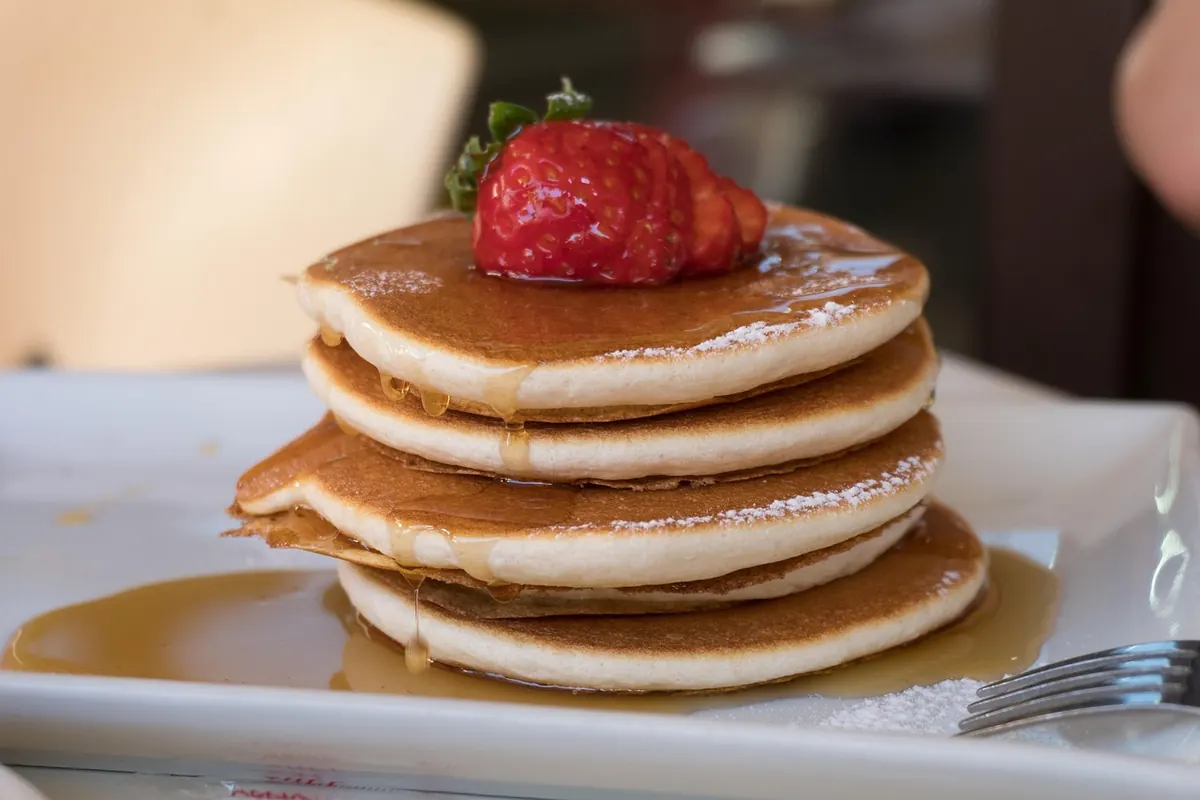
Two bottles sit on the table at the same diner, and only one of them came out of a tree. The amber one pours thin and smells faintly of vanilla and wood. The other is thick and glossy, and it tastes like caramel with the volume turned up. Both get called maple syrup by people who should know better. The difference shows up in three places you can check for yourself: the ingredient list, the flavor, and what you pay per ounce.
What's Actually in the Bottle
Real maple syrup is a single-ingredient product. Sap is collected from sugar maples during a short window in late winter and early spring, then boiled until most of the water is gone. It takes roughly forty gallons of sap to make one gallon of syrup, which is the whole reason the real thing costs what it does.
Pick up a jug of pure maple and read the side panel: the ingredient list says "maple syrup" and stops there. Some producers add the grade or the region. Nobody needs to explain anything.
Pancake syrup is a different product wearing a borrowed name. Its base is corn syrup or high fructose corn syrup, thinned with water and built out with caramel color, cellulose gum for body, salt, preservatives, and flavorings. A small amount of real maple sometimes appears at the end of the list, which lets the front label say "made with real maple syrup" without technically lying. It also doesn't mean maple is what you're tasting.
How to Read a Label Without Getting Fooled
Most of the confusion at the store disappears once you know where to look. The front of the bottle is marketing; the back is information.
- Go straight to the ingredient list. One ingredient, "maple syrup," means you're holding the real thing. Anything else, no matter how rustic the label looks, is a blend or a corn-syrup syrup.
- Learn the code words. "Table syrup," "pancake syrup," "waffle syrup," and "maple-flavored syrup" all point to the corn-syrup version. Only the plain phrase "maple syrup" is a promise.
- Decode the grade. Retail maple in the United States is sold as Grade A with a color descriptor: Golden, Amber, Dark, or Very Dark. If you find an old jug marked Grade B, that's the dark, robust syrup now sold as Dark or Very Dark, and it's excellent for baking. Canadian bottles use a similar Grade A system with their own wording.
- Note the origin. Quebec, Vermont, Maine, New York, and Ontario all produce distinctive syrup. Region tells you something about style and freshness, not quality.
- Check the size against the price. A small fancy bottle is often a worse value than a plain quart, and the syrup inside is identical.
Storage, once you get it home
Real maple syrup should go in the refrigerator after opening, and it keeps far longer in the freezer, where it thickens but never hardens into a block. If crystals form at the bottom of the jug, stand it in a bowl of hot water for a few minutes and they'll dissolve. Pancake syrup is shelf-stable before opening; follow the label after that. Left out on the counter for weeks, real maple can grow a bit of surface mold, so don't treat it like ketchup.
Taste: Thin, Layered, and Sweet in a Different Way
The first surprise for anyone raised on pancake syrup is the texture. Real maple pours like a light oil and coats a pancake in a thin film rather than a blanket. That thinness is why a little goes further than you expect.
Flavor shifts with the grade. Golden is delicate, with vanilla and a light floral edge that works on yogurt and in cocktails. Amber is the all-purpose middle: caramel, browned butter, a clean finish. Dark and Very Dark bring molasses and toasted sugar, and they hold their own against coffee, chili, and roasted vegetables. A wood-fired evaporator can leave a faint smokiness in the jug, which is a feature, not a flaw.
Pancake syrup works differently. It hits one big note of caramel and vanilla, thick and slick on the tongue, and it tastes nearly the same from brand to brand. That consistency is deliberate. It's also why the flavor disappears the moment syrup meets something with any character of its own.
One trick worth adopting: warm whichever syrup you use in a small pitcher set in hot water for a few minutes. Warming loosens the body and lifts the aroma, and you'll pour less of it.
Cooking and Baking: Where Each One Belongs
In the kitchen, real maple is an ingredient. Pancake syrup is a condiment that occasionally pretends otherwise.
For baking, maple can replace granulated sugar if you adjust for the water it brings:
- Swap 1 cup of sugar for 3/4 cup of maple syrup.
- Reduce the other liquid in the recipe by about 3 tablespoons.
- Add 1/4 teaspoon of baking soda per cup of syrup to help the batter brown evenly.
- Drop the oven temperature by 25°F, since maple browns faster than sugar.
Beyond baking, dark maple makes a glaze for roasted carrots, squash, and salmon, a whisk-in for vinaigrettes, and a drizzle for bacon or vanilla ice cream. Pancake syrup can stand in for a quick glaze if that's all you have, but the gums and flavorings can go flat under heat and leave a slick texture behind. Don't build a recipe around it. And don't pour pancake syrup into a dish where the maple is supposed to be the point — you'll taste the difference, and so will everyone else.
Price: Why the Gap Is Real
Anyone who has compared the two shelves knows the sticker shock. Real maple costs several times what a same-size bottle of pancake syrup does, and that gap reflects real inputs: a short harvest season, weather that decides the size of the crop every year, fuel for boiling, and forty gallons of sap for every gallon of finished syrup. Corn syrup comes out of a refinery by the tanker load.
That said, there are sensible ways to buy maple. A quart or gallon is cheaper per ounce than a decorative bottle. Dark and Very Dark grades often cost less than Golden and do more in the kitchen. Buying directly from a sugarhouse or a farmers market usually means a better price, and if you're in a producing region, a fresher jug. Since maple keeps in the freezer, buying big isn't a gamble. Prices vary by region and by harvest, so compare per ounce rather than per bottle.
Matching the Bottle to the Job
If you eat pancakes twice a year and want a thick, sweet pour, pancake syrup is honest about what it is, and no one is going to argue with your breakfast. If you cook with syrup, drizzle it on oatmeal, or just want the flavor of an actual tree, buy real maple and start with one grade at a time until you find your favorite. Many kitchens keep both: the good bottle for baking and finishing, the cheap one for a kid's waffle on a school morning. Whichever you choose, read the back panel once, know what you're buying, and store it where it belongs.