
The History of Maple Syrup in North America: Indigenous Knowledge to Modern Sugarhouses
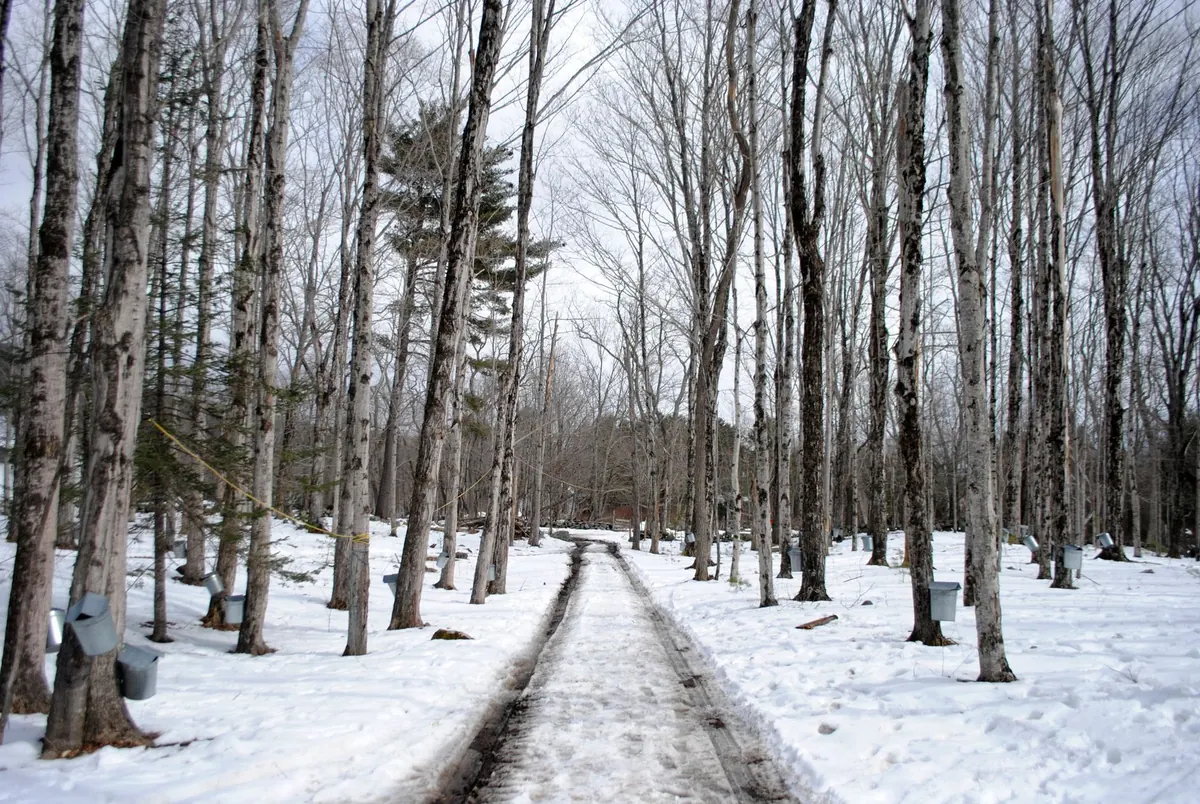
Every March, steam rolls out of sugarhouse roofs from Maine to Minnesota, and the smell — sweet, a little smoky, somewhere between caramel and woodfire — is one of the oldest seasonal signals on the continent. Long before steel evaporators, people were harvesting sap with stone tools, birch bark and an intimate reading of the weather. The history of maple syrup is not a straight line from primitive to modern. It is a long chain of practical knowledge, handed down, borrowed and steadily improved.
Before the Kettle: Indigenous Maple Knowledge
Maple sugaring is older than written records in northeastern North America. Long before European contact, nations across the maple range — the Haudenosaunee, Anishinaabe, Ojibwe, Potawatomi, Wabanaki, Abenaki, Mi'kmaq, Penobscot and many others — harvested sap each spring as one of the first fresh foods after a winter of dried meat, corn and preserved stores. Maple sugar was not a garnish. It was calories, trade goods and medicine, a sweetener that kept and traveled well.
Many of those nations tell a version of the same teaching. The sap once ran from the trees thick and sweet as honey, so people had no reason to hunt or tend crops. A spirit or culture hero — Gluskabe in several Wabanaki tellings, other figures elsewhere — poured water into the maples so the sap would run thin. From then on, sweetening anything took work. The message holds across tellings: the gift was real, and so was the labor.
Bark Makuks, Hot Stones and the Skill of Fire
The tools were wood, stone, bone and fire, and the technique was precise.
- Wait for the right weather. Sap runs when nights freeze and days thaw, typically late winter into early spring. That freeze-thaw rhythm is what pressurizes the tree.
- Open the tree. A diagonal gash or V-shaped cut in the bark, made with a stone axe or later a metal tomahawk, gave the sap a path out.
- Direct the drip. A wooden spile — often cedar, sumac or birch — was tapped into the cut to channel sap away from the trunk.
- Catch it. Birch bark vessels, folded and stitched, or hollowed logs caught the run.
- Concentrate it. Two methods were common: dropping heated stones into the sap to evaporate water, or letting the sap freeze overnight and lifting off the ice, which left a sweeter liquid behind.
- Finish it. More boiling produced syrup; longer boiling and stirring produced granular maple sugar, the form most often stored and traded.
Maple sugar was the practical product. It did not spoil, it weighed far less than syrup, and it could be packed into baskets or hide bags for trade over long distances. If you have ever reduced a pot of sap on the stove, you already know the arithmetic: roughly forty parts of sap for one part of syrup, depending on the sugar content of the tree. Indigenous makers worked with that same ratio, without a thermometer.
Colonists, Iron Pots and a Moral Argument for Maple
European colonists in the St. Lawrence valley and New England learned sugaring from the people already doing it. The technology changed first: iron kettles hung over open fires replaced hot stones, letting families boil larger volumes with less labor. By the eighteenth and nineteenth centuries, farm households across the Northeast and what is now Ontario and Quebec put up maple sugar every spring, partly because it was cheap and local, and partly because white cane sugar was an imported luxury tied to Caribbean plantations worked by enslaved people.
That connection gave maple a moral reputation. Abolitionists and Quakers in the northern states promoted maple sugar as a free-labor sweetener, and the physician and reformer Benjamin Rush made the case for it on those grounds. For a time, buying maple was a political choice as much as a flavor — a small, edible argument against slavery. Household production faded as cane sugar grew cheaper, but the spring ritual stayed.
The Evaporator and the Birth of the Sugarhouse
The biggest single change to maple production arrived in the nineteenth century: the evaporator, a wide shallow pan set over a firebox, often with flues running through it to expose more sap to heat. Compared with a round kettle, a flat pan with greater surface area boils faster and burns less fuel. That innovation turned a household chore into a farm enterprise.
Around the evaporator grew the sugarhouse — a shed built to shelter the boil, vent the steam and give the operation a social center. Wooden buckets replaced birch bark; later, metal spiles replaced wooden ones, and galvanized buckets with lids replaced wood. Sugaring-off parties, where neighbors gathered for fresh syrup poured onto snow, became a regional tradition from Maine to Wisconsin. Grading systems emerged in this era too, as buyers and bulk dealers needed shared language for color and flavor.
Tubing, Vacuum and Reverse Osmosis
The twentieth century brought mechanization, and the last fifty years brought the largest leap. Plastic tubing, introduced in the 1960s and refined through the 1970s, replaced haul
Photo: Matt Barnard / Pexels